

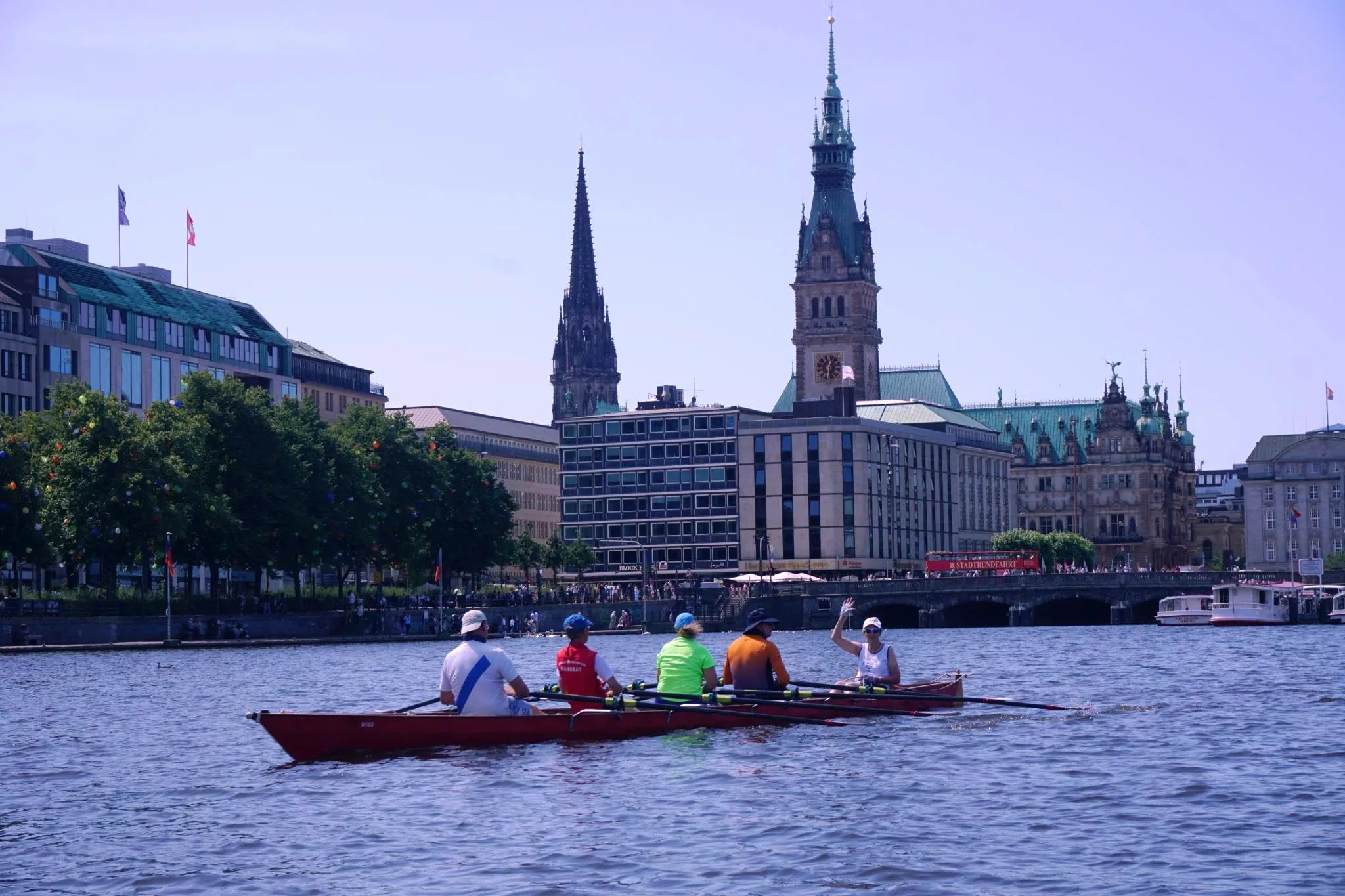
Two countries, three boats, four clubs – Elbe and Öresund send their greetings.
MRC hike to Hamburg and Copenhagen from 11 to 19 July 2026
First station: Hamburg
Where was the first German rowing club founded? In Hamburg, a good 40 years before Otto Weiss & Co brought rowing to Starnberg. English businessmen had made this sport palatable to the Hanseatics. A delegation from the MRC wanted to take a closer look at the scene up there.
Three rivers – three clubs
In Hamburg, the rivers Elbe, Alster and Bille converge. At each of them we are generously given three fours with Obleuten, who like to show us their territory. Three rivers and three clubs that couldn't be more different.
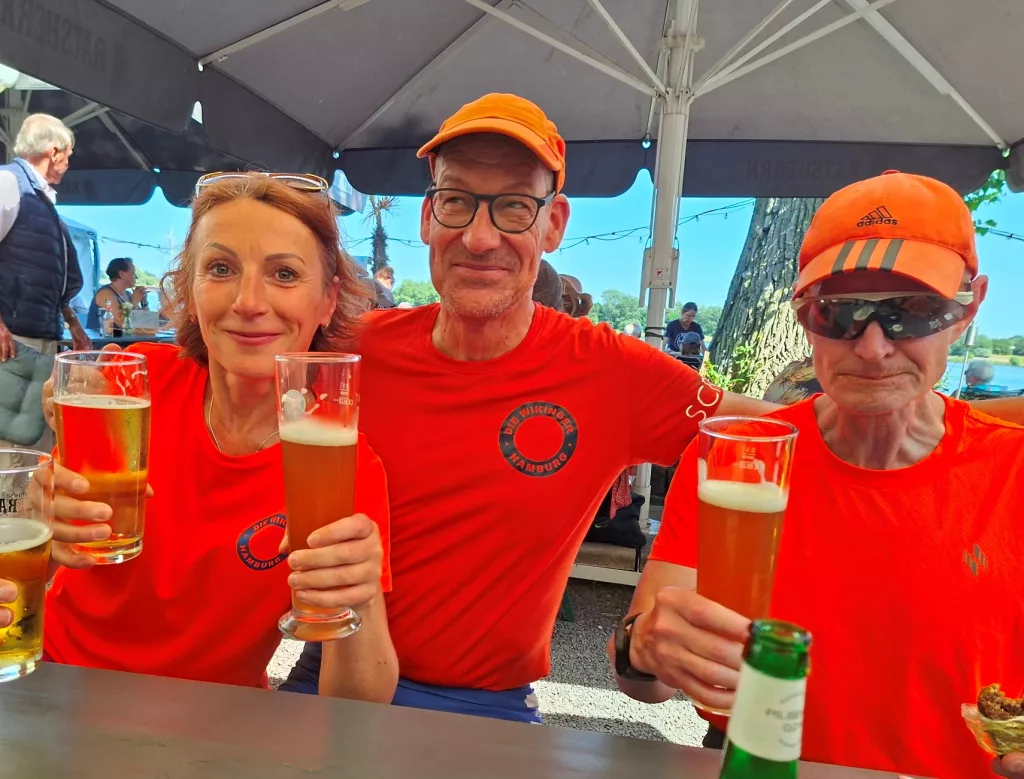
On Sunday with the Vikings
Let’s start with the hiking rowing club ‘The Vikings’. It is in the Veddel, a mini-district that stretches over three small Elbe islands and is located in the middle of the harbour. The clubhouse is very hidden, around the house rough industrial charm. What people from Bavaria don't know: Before rowing, the tidal calendar must be observed. Although the North Sea is 100 km away, the high tide still leads to a tidal stroke of 3 m. You have to row strategically: If you want to travel upstream like us, it is best to start with running water, so there is even a thrust of aft on ‘mountain travel’. And on the return journey you should better get rid of running water.
The boats are called in this club Aegir, Sleipnir, Fafner or Frigga. But you don't wear horn helmets and Wagner music isn't played either. They are proud to be the only club active in the Port of Hamburg. You can also: The port is interesting and always different – simply varied. If you are looking for an idyll, you have to row a bit.
We make a round of the harbour, then the Norderelbe goes up to the fork of the river in front of Hamburg, where the stream divides into Norder- and Süderelbe. This is the town of Over. On the banks of the Elbe there is a well-known economy where the Vikings have reserved tables.
Back to the Veddel
The tide is tipping, the water is starting to run off – it is time to set off. The Northern Elbe is going down. Shortly before the Elbe bridges, enter the market canal on the left – up to the barrier. 31 km rowed, that was’s for today. It is scheduled for the next Tuesday 7 p.m. for the weekly club outing. It crosses the Elbe River – past the Elbphilharmonie to the Speicherstadt and back again. This is going to be totally different for us!
Monday: It's Bille's turn
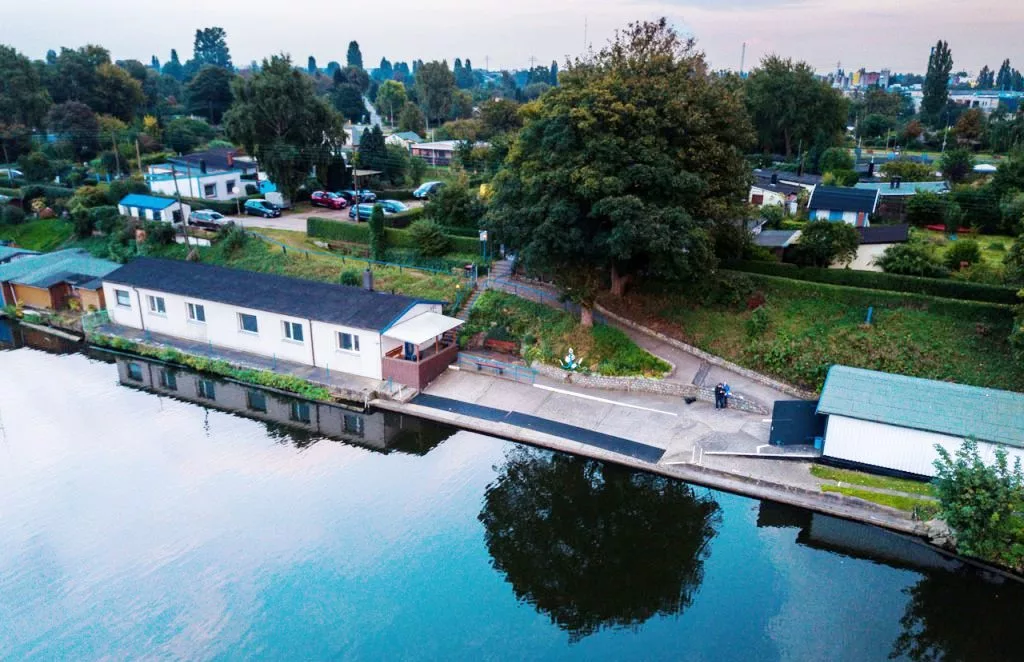
Our crew makes their way to the Biller RC by public transport. The club area is a strip of land directly on the Bille, estimated 15 m wide and 150 m long, located on the edge of a small garden colony.
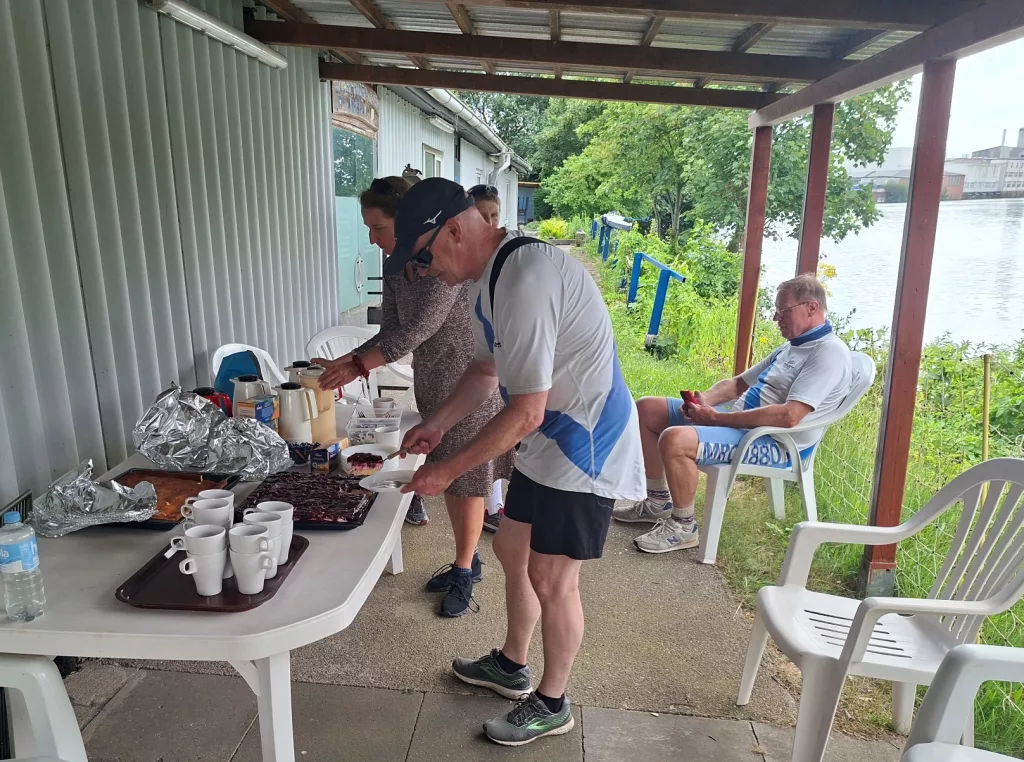
The club impresses with its hospitality. Just a few weeks before us, an MRC womanhood was already here at the Bille for rowing, which tells us the well-filled club guestbook. We twelve take an extended tour up the bill, it goes as far as the outskirts of Hamburg. Upon return, there are plenty of wonderful fruit cakes and coffee. Thank you, dear Biller, for the warm welcome and your generosity.
Last but not least: The Alster river
Hamburg’s best-known rowing area is the Alster, which is where we still have to go. At the Alster rowing club Hanseat we are given the boats on Tuesday, three Hanseaten accompany us as Obleute. According to that provision, it is ‘free’.
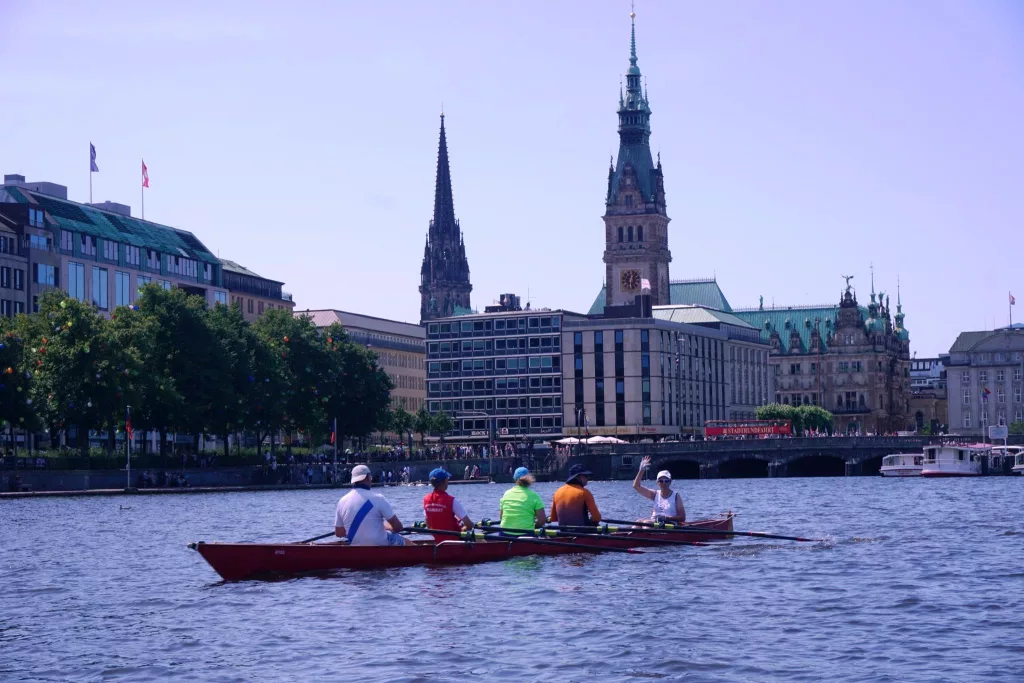
We leave nothing out: First City Park Pond, then Rondeelt Pond. Pause at the Hamburger Ruderinnen-Club, continue through the Außenalster to the Binnenalster to the Jungfernstieg, back via the Edelclub Germania, past the RC Alemannia (Olaf Scholz was not spotted) and finally back to Winterhude. A real experience, this tour. Hardly anyone had any idea that there are so many rowable waterways in the middle of Hamburg. Thank you, dear Hanseaten.
Speicherstadt and Elbphilharmonie await
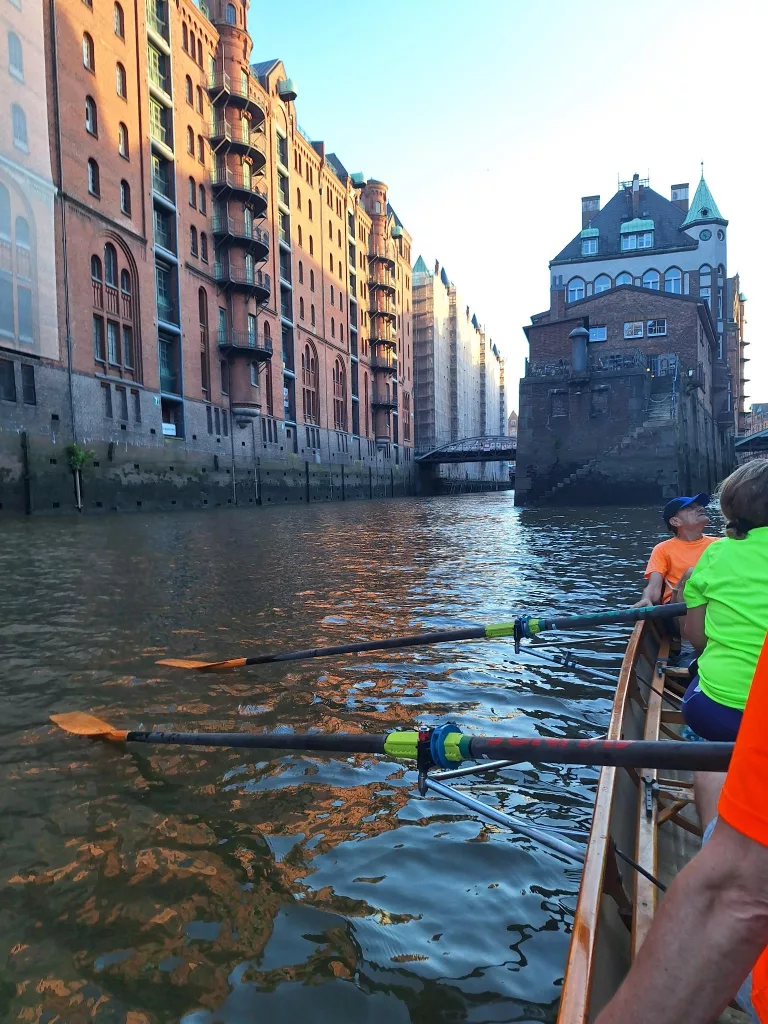
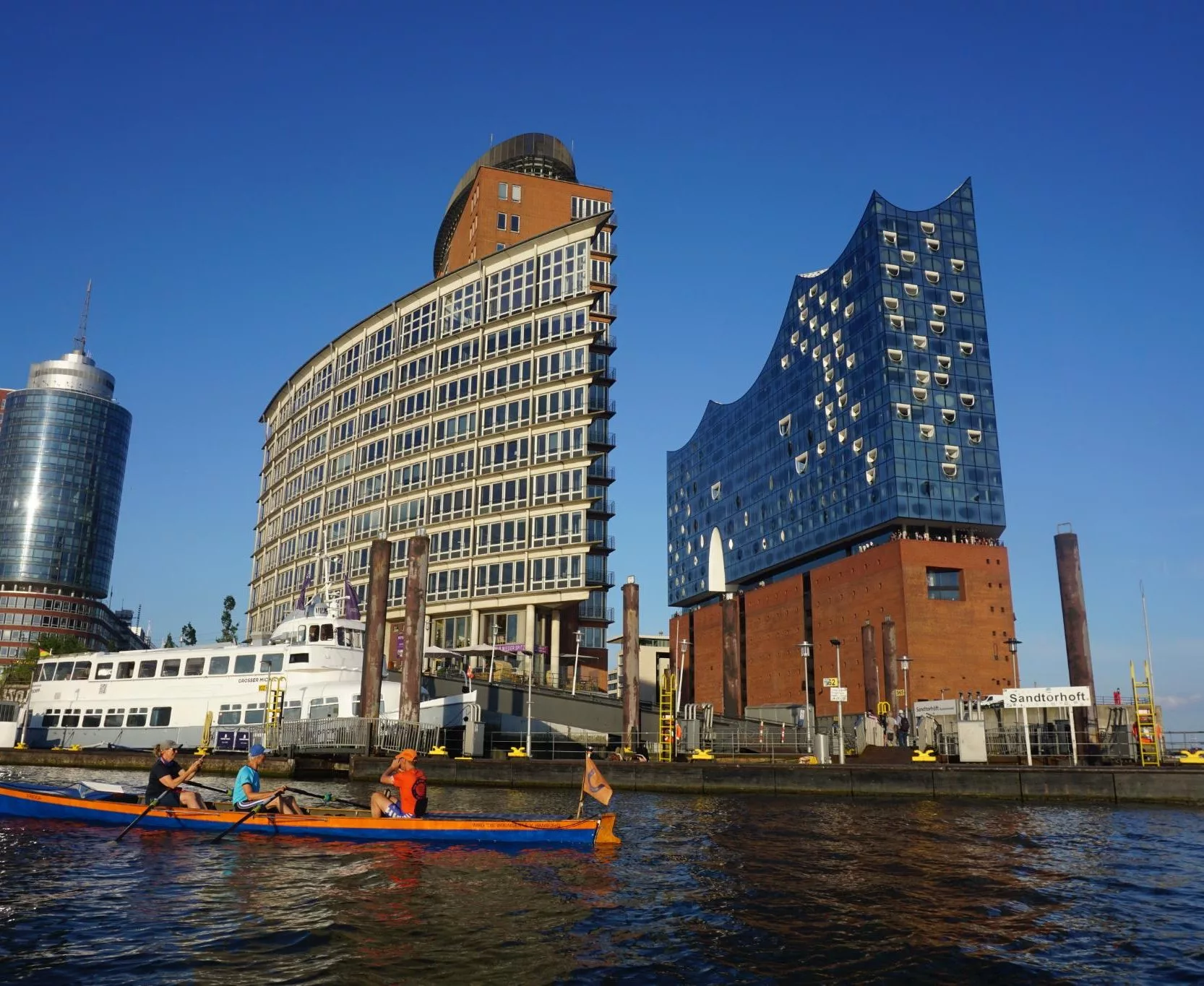
The Alster is now ticked off, but we have to be back in the Veddel at 6 p.m. Stopover at the hotel is not in time. With the Vikings then quickly the foursome in the water, crew in the boats and off over the Elbe. Soon the two Hamburg hotspots are in sight: ElPhi and the Speicherstadt. Time is running out, stress comes on: We want to eat later at the “Spice Anker”, the Indian next to our hotel, before he closes his kitchen. So get to the Skulls, back to the boathouse and from there to the restaurant. It hasn't happened yet, the evening has been saved. And twelve hungry MRC-lers delight our Indian chef with a respectable late turnover. The guests are very satisfied: His food is excellent again.
Hellmuth, the orga chief: Chapeau!
The Hamburg adventure was exceptionally well organised – there is no better way. Of all those who were there: Hellmuth, thank you. You're relieved now. Because from now on our Danmark consultant Konstanze will take over the direction of the journey.
Next objective: Copenhagen
The train from Hamburg Hbf is already Danish, but the tracks to the border are still German. That's why we're playing through Schleswig-Holstein with Tempo 100. After two hours we finally reach the Danish border. Where a breath of GDR blows – only a single door on the whole train is opened, those who get out are suspiciously eyed by the Danish border guard. Then the train continues northwards at an ICE speed of 250 to Fredericia, which lies in front of the Belt Bridge to the island of Funen.
SEV in Danish
From now on SEV is announced, which the Danes also know: All passengers from the bustling ICE of Hamburg have to change to buses with massive luggage, with which it goes 135 km further through Funen and Zealand, until shortly before Copenhagen. This happens under expert guidance from the bus staff in just under 30 minutes. The tone remains quiet, no one scolds and above all: No one's pushing. It runs leisurely and calmly. 90 min later we reach Ringsted, here change to København. Where Samuel is waiting for us at Central Station. This is our liaison, a danized Swiss from the Copenhagen club KVIK.
Surprise 1: Ride-swimmer test
Check-in at Danhostel, where we will stay for four days on the 13th floor.
After that, it's waiting Delicacies of the day on us: The swimming test! Not far from our accommodation there is a public bathing area, we all have to go there into the Baltic Sea water. This has a pleasant 21 °C, just right after this hot day on the bus. We're supposed to swim 300 m, Samuel's looking. Who's creating (spoiler: Everyone!), can start rowing tomorrow. Then eating, drinking, showering, sleeping: Everything is/everyone is done from the day, and it's around.
KVIK, the club
After breakfast by public transport to the rowing club. It is called KVIK and is the oldest Danish Roklubb – founded in 1869. ‘Kvik’ is not an abbreviation, but simply the Danish word for ‘fast, lively, lively, quick’. Samuel, our dedicated supervisor, introduces us to Dorte and Klaus. Three boats need three captains.
Inrigger boats
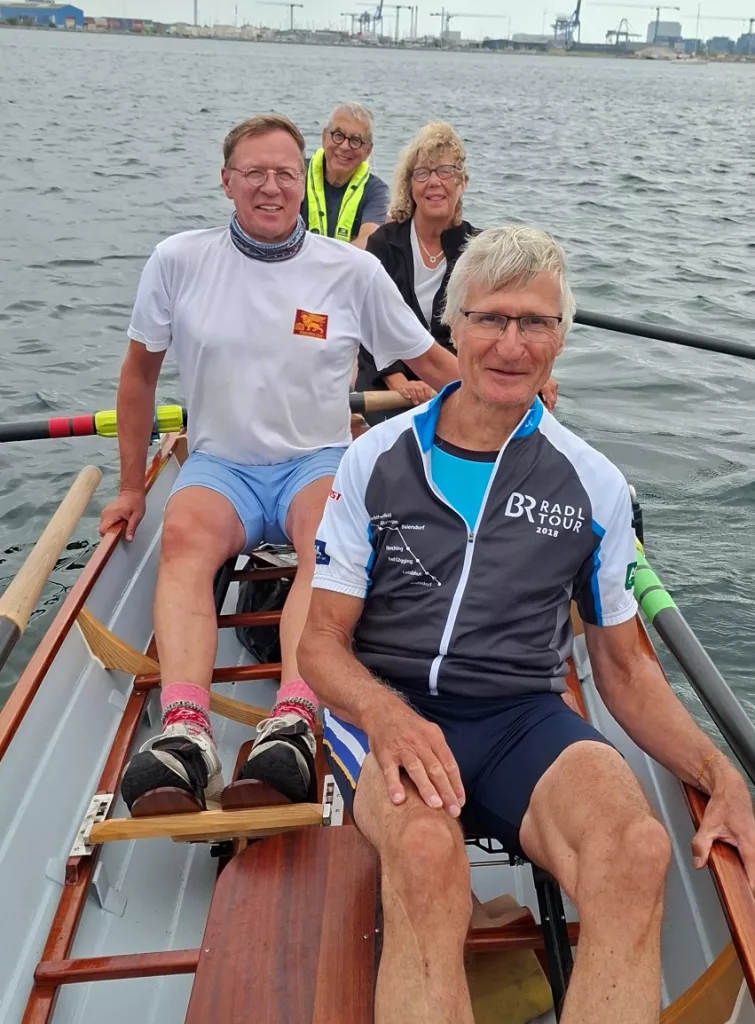
We will row in Inrigger boats. These are wide and sea-going belt boats, one sits in a row. Advantage: You can also easily change places on the road. Disadvantage: With very different body weights of the oarsmen, the barge can be crooked. No, not only: “Boat hangs by x-board” – here, if you are unlucky, you get such a striking side that you can see it with the naked eye.
Seniors tournaments on the high seas
There is also a strange tradition: The course is changed every 20 minutes on the way. Of all five. Who steers, goes through the whole boat on place 1, 4 goes on control, all others slip one in the meantime: A bit of a delicate exercise. The meaning of the whole thing? Don’t open up to us, maybe you do it because you can. Nothing against a change of sides after landing, it is quite good to pull sometimes left and sometimes right. But this one? Anyway, we are guests and silently book it under “Other countries, other customs”.
See Copenhagen: There comes joy
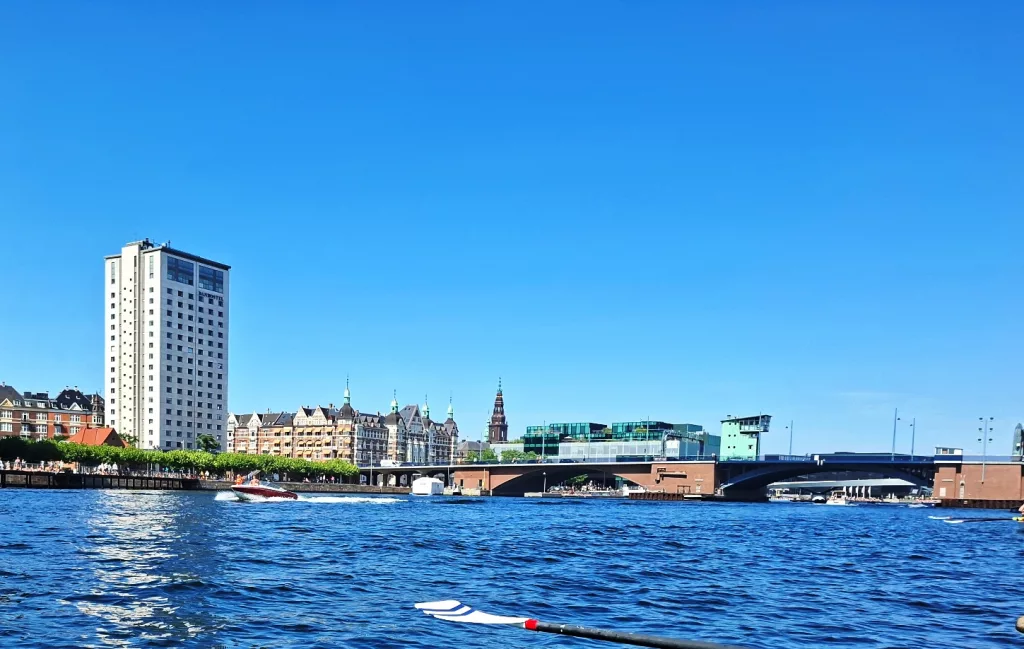
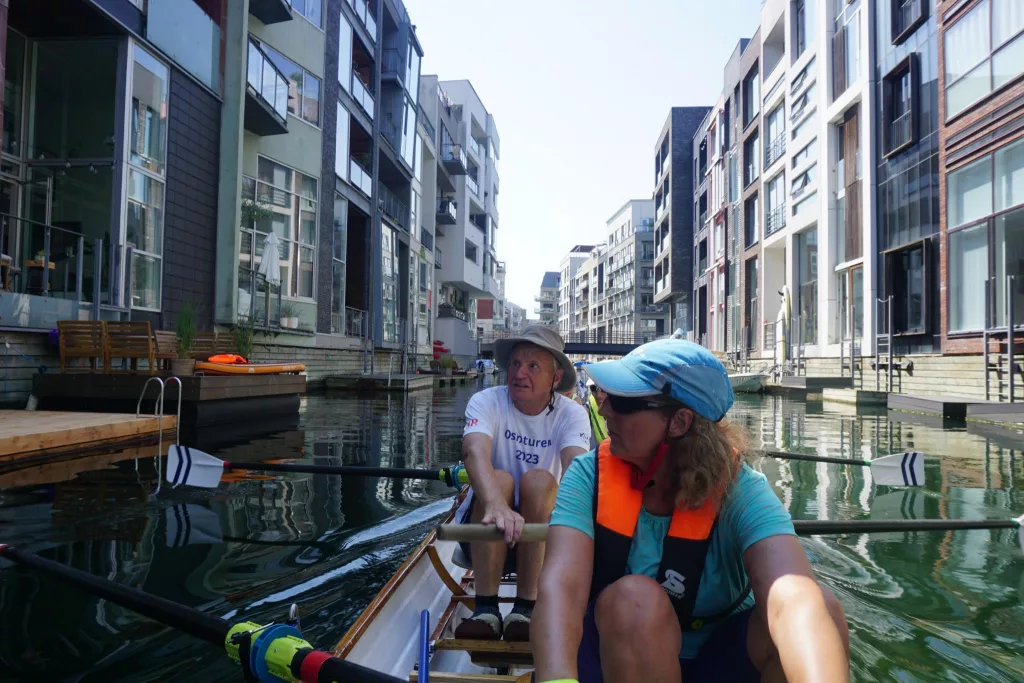
The journey goes through the canal between the island of Zealand and the offshore island of Amager. Passing the ‘Freistadt Christiania’, the ‘alternative’ residential district founded in 1971, then through all sorts of harbour channels, which are densely built on both sides and where we can see some spectacular, contemporary new residential architecture. There is hardly anything old here, which has, among other things, something to do with the British, who in 1807 thoroughly fired Copenhagen from the sea in order to force Denmark to abandon the continental barrier imposed by Napoleon.
Surprise 2: Unexpected noble feeding
The day is hot, we are already at least 10 km behind us – a short drinking break would be called for. Suddenly and completely unexpectedly, a small restaurant appears, the ‘Bådklubben Valby’, where you can moor. And then what a heavenly labsal: The host has prepared a small buffet with Smørrebrøds. In addition, there is’s cool Tuborg – yes, what else do you want? So upgraded we are in a good mood on the way back to KVIK.
All of Copenhagen is an outdoor swimming pool
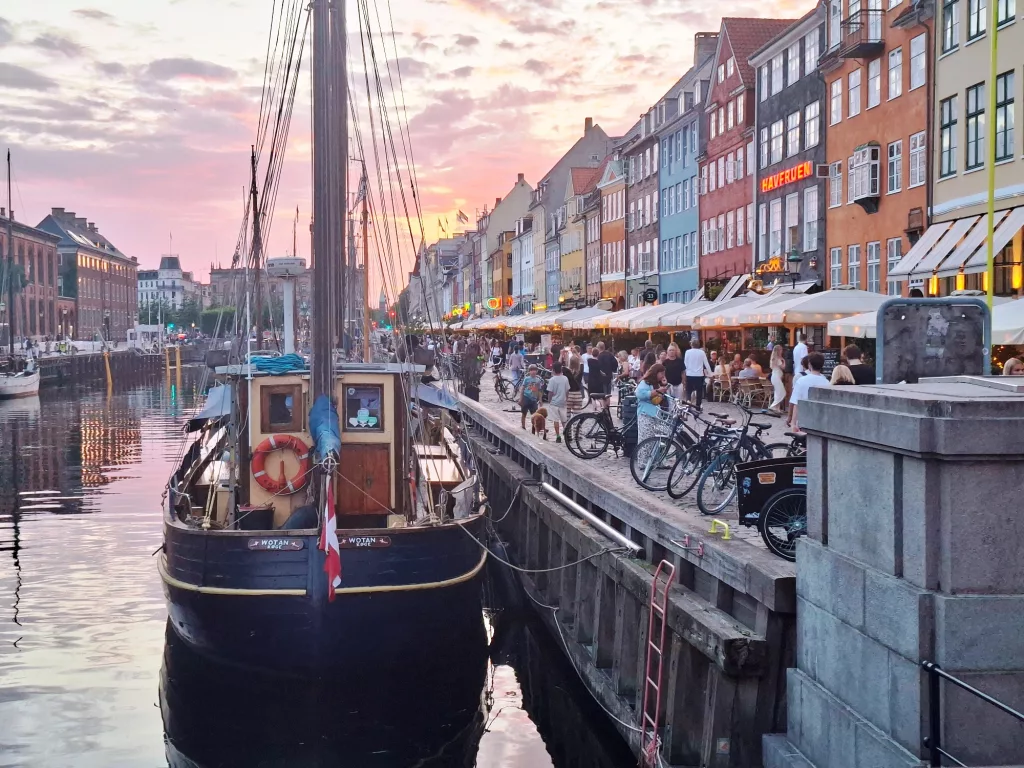
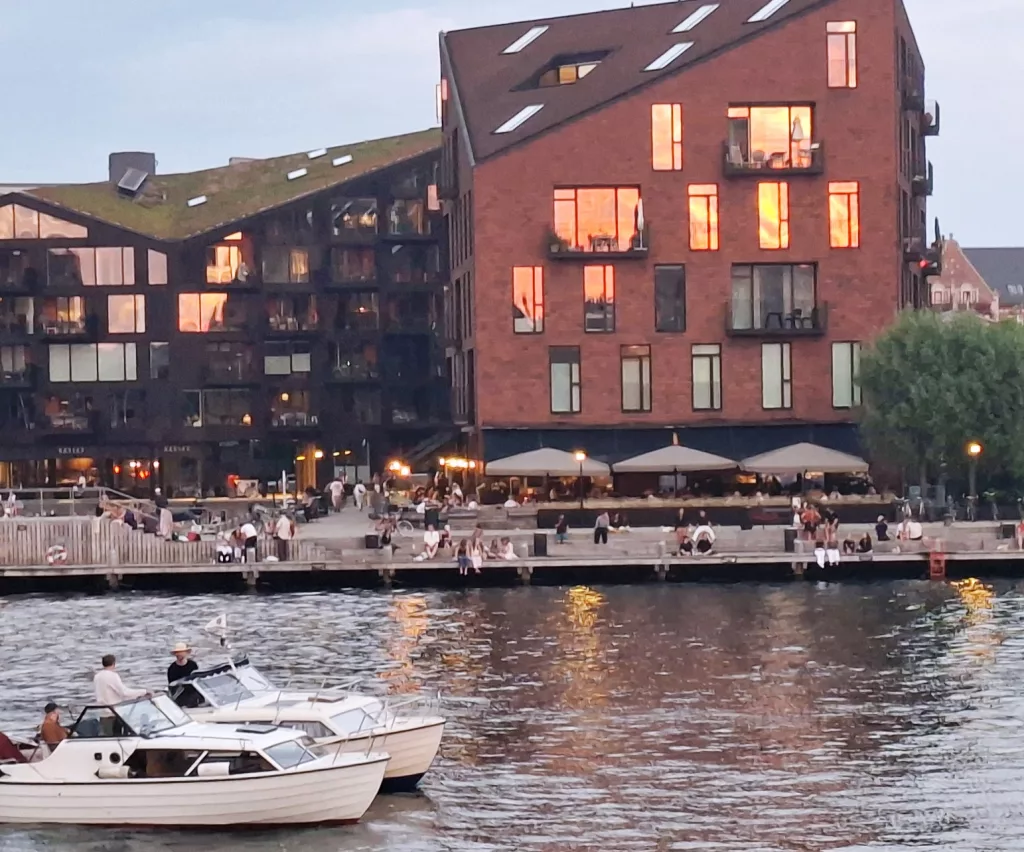
The countless outdoor swimming pools are striking for the German visitor. It's on every corner that's on the water. Everything public, all well equipped with sunbathing facilities, easily accessible and barrier-free. No one has to pay anything to be there. All bathing areas are very well frequented, on a normal working day during working hours. Such a long nice weather period as we were allowed to experience, these pleasant water temperatures, which are not often here.
Island cruise
New day: Friday, July 17th. New objective: The island of Flakfortet off Copenhagen, a former military base. You don't have to have seen it. But first, you always need a goal when rowing. And then you can see from the boat better the Öresund and the bridge over to Sweden. There's a picnic on the island. Samuel has shopped generously, we settle down, get a cool Tuborg in the nearby restaurant and rejoice in life.
Saturday: Farewell is in the air
Last time KVIK, there is still a walk up the Öresund. Here on the shore live the better-heeled, you can see’s simply. The drive goes to Charlottenlund, there is the Gabbiano. Smørrebrød is enough – as is the case everywhere in Denmark. It is clear that a Tuborg is also part of this.
In the evening: Mad
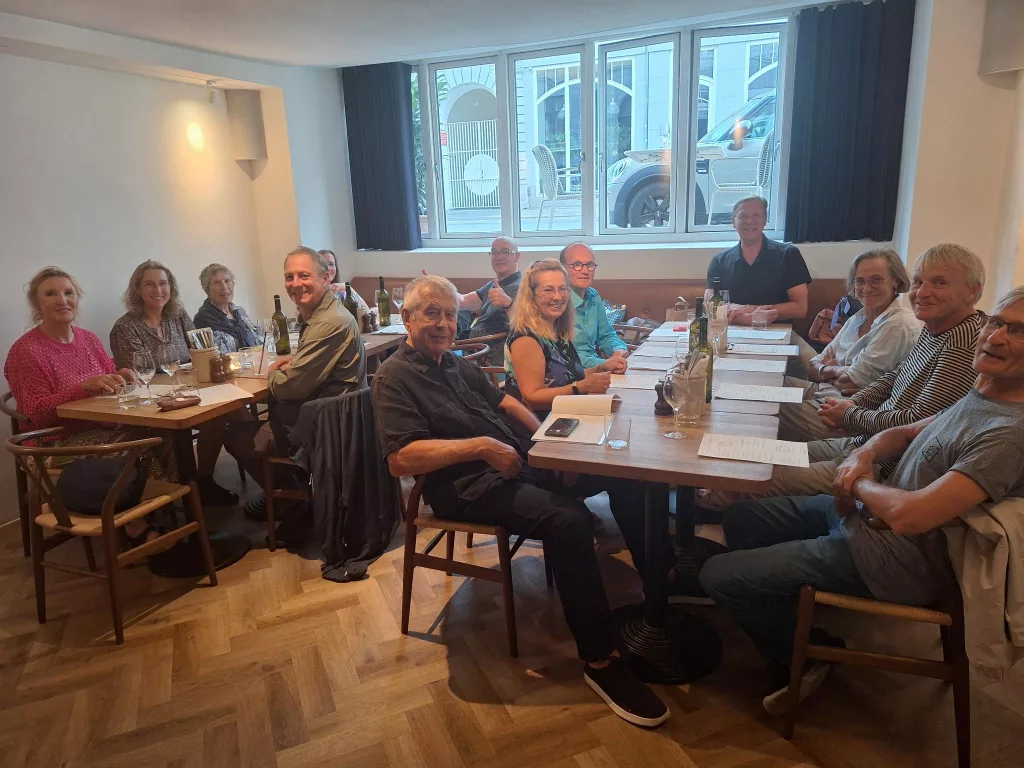
No, we're not crazy yet. ‘Mad’ is Danish and means ‘food’. We twelve and our three Kvikies let us spoil ourselves in the evening in the restaurant Mad-Klubben at the common meal. What a pleasant ending. That was it from our side, dear Danskes. Thank you very much Samuel, Dorte & Klaus. Good war’s. We have seen a lot with you.
conclusion
A fabulously organized trip to Copenhagen is behind us. It went like clockwork – Konstanze’s planning just happened! Thanks for everything – 5 points on Tripadvisor.